Think You Know About Brain Foods? Think Again.
Let's be honest. Most of what you've read about "brain foods" is overblown nonsense. Blueberries won't turn you into Einstein overnight. And that trendy powder? It's probably just lightening your wallet.
But here's the thing: what you eat does have a huge impact on your brain function. We're just looking at it all wrong.
The Real Science of Brain Fuel
Your brain is a metabolic powerhouse. It makes up only 2% of your body weight, but it burns through a whopping 20% of your daily calories. That's a lot of energy for such a tiny organ.
So what does this mean for you? It means that the right balance of macronutrients is absolutely crucial for keeping your brain firing on all cylinders.
The Brain Fuel Trifecta
- Carbohydrates: Your brain's preferred energy source
- Proteins: The building blocks for neurotransmitters
- Healthy Fats: Essential for brain cell structure and communication
Let's break these down and look at some foods that actually deliver the goods.
Complex Carbs: Your Brain's Power Source
Forget the low-carb hype. Your brain absolutely needs carbohydrates to function. But here's the catch: it needs the right kind of carbs.
The best carbs for your brain are the ones that provide a steady, slow release of energy. Think complex carbohydrates that are high in fiber.
Top Brain-Friendly Carbs:
- Quinoa: Packed with protein and fiber, it's a slow-burning fuel source.
- Sweet Potatoes: Loaded with beta-carotene and fiber for steady energy release.
- Oatmeal: Especially steel-cut oats for a 4-hour sustained energy boost.
In my practice, I've seen patients experience dramatic improvements in focus and mental clarity just by switching from processed carbs to these complex options.
Protein: The Building Blocks of Brain Function
Protein isn't just for muscles. It's absolutely critical for your brain. Why? Because proteins break down into amino acids, which are the precursors to neurotransmitters.
In other words, without enough protein, your brain can't make the chemicals it needs to function properly.
Top Brain-Boosting Protein Sources:
- Eggs: The gold standard. They contain all essential amino acids plus choline, a key brain nutrient.
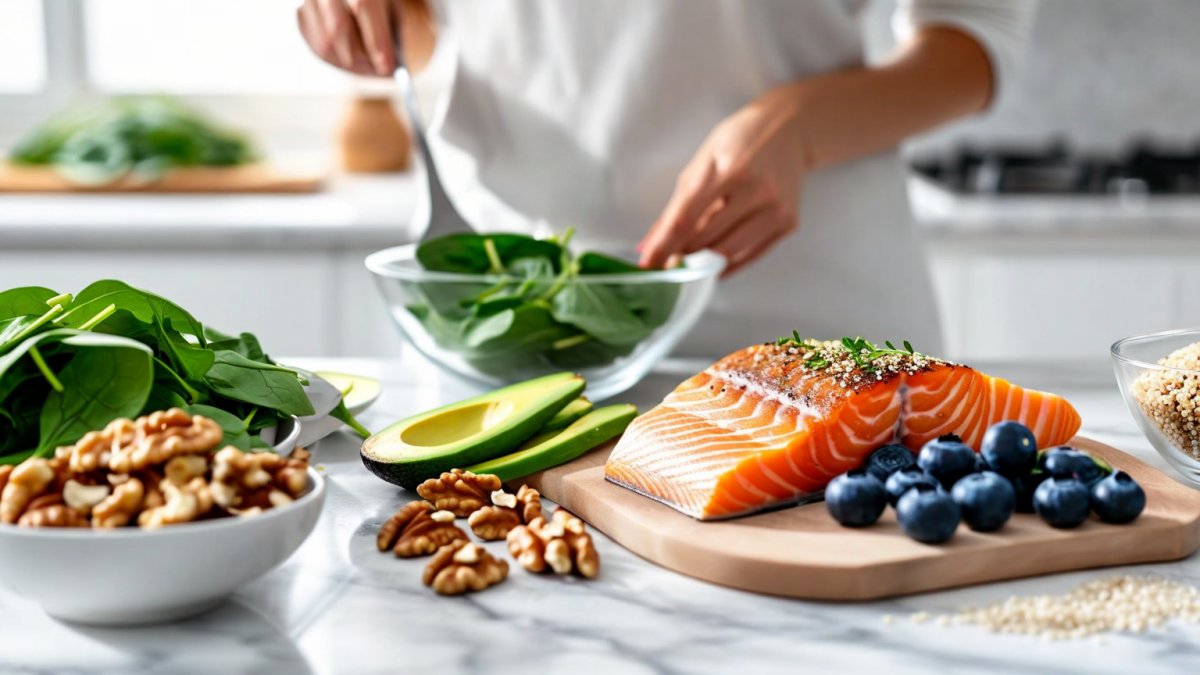
- Wild Caught Salmon: Protein + omega-3 fatty acids = brain food perfection.
- Greek Yogurt: High in protein and probiotics, which support the gut-brain connection.
The research is pretty clear on this one: adequate protein intake is linked to better cognitive function, especially as we age.
Healthy Fats: Your Brain's Best Friend
Here's a mind-blowing fact: Your brain is about 60% fat. Yep, you're walking around with a big ol' ball of fat in your head. And it needs dietary fat to function properly.
But not just any fats. We're talking about healthy, anti-inflammatory fats that support brain cell structure and communication.
Brain-Boosting Fat Sources:
- Avocados: Packed with monounsaturated fats and vitamin E for brain health.
- Walnuts: Rich in omega-3s and antioxidants. They even look like little brains!
- Extra Virgin Olive Oil: The cornerstone of the brain-healthy Mediterranean diet.
I tell my clients to aim for a variety of these healthy fats every day. Your brain will thank you.
So What Does This All Mean?
Forget about miracle "brain foods." Focus on a balanced diet rich in complex carbs, lean proteins, and healthy fats. That's the real secret to keeping your brain sharp and focused.
And remember, consistency is key. One avocado won't change your life. But a long-term commitment to nourishing your brain? That's where the magic happens.
Now if you'll excuse me, I'm off to make a brain-boosting lunch of quinoa, salmon, and avocado. Science says it's a good idea, after all.